After Tamil Nadu, Madhya Pradesh and Uttar Pradesh, Bihar too is initiating the misplaced project of linking rivers even as it is being predicted that "Ganga would soon become a seasonal river-flooded in monsoons and dry in the summers."
Out of the 30 links in the National Interlinking of Rivers project that includes 14 links in the Himalayan component, 6 river-link canals are directly related to Bihar. It is noteworthy that quite like Tamil Nadu, Bihar too is proposing its linking of rivers projects as independent of the national project.
States like Kerala, West Bengal and Punjab have rejected such projects. Neighboring countries Nepal and Bangladesh too has rejected Interlinking of Rivers projects in the past.
Unmindful of the global ecological changes and river basin approach Uttar Pradesh has already launched Ganga Expressway Project in 2007 to construct a 1047 km access controlled eight-laned expressway running along the Ganga river to provide connectivity and as a flood control measure although the catastrophe brought about by such measures is quite evident.
Continuing the same trend, Bijendra Prasad Yadav, Bihar's Water Resources Development Minister informed the Bihar Legislative Council on 4, December that inter-linking of rivers could rid the state of perennial problems of flood and drought. Replying to a special debate on drought like situation prevailing in many districts of south Bihar, Yadav said "unless and until rivers are inter-linked the twin problems can not be solved." Yadav said the inter-linking of Bihar rivers would cost more than Rs 4,000 crore.
Stating that 26 percent area of the state are drought-hit, Yadav informed the Vidhan Parishad that the state did not have any reservoir which was crucial for irrigation. It was either in Nepal or in Uttar Pradesh.
Replying to a debate on perennial problem of flood in the state referred to the devastation caused by the Kosi deluge and the probe by judicial commission underway.
Nearly 33.55 lakh people in five districts of north Bihar were affected by the devastation caused by the Kosi deluge due to the breach in the embankment at Kusaha in Nepal on August 18.
The Centre has constituted a high level committee, consisting of three representatives of the Centre, two from Nepal and five from Bihar government, for the repair and maintenance of the embankment.
He said the state did not have any reservoir which was crucial for irrigation. It was either in Nepal or in Uttar Pradesh.
He informed the House that about 33.55 lakh people in five districts were affected by the Kosi deluge.
Earlier, on 25 November, 2008 the Supreme Court sought a detailed status report from the government on the implementation of five river-linking projects in southern, western and central India.
A bench headed by Chief Justice K.G. Balakrishnan asked the central government to apprise it of the latest developments on the projects by the fourth week of January.
The bench, which also included Justice P. Sathasivam and Justice J.M. Panchal, also asked Maharashtra and Gujarat to apprise the court of the reasons for the delay in signing a treaty between the two states for interlinking the Par, Tapti, Narmada, Daman Ganga and Pinjal rivers.
The bench also asked Tamil Nadu and Kerala to apprise the court of their differences in linking three rivers - Pamba, Achankoli and Vaippar - in their regions.
The apex court is seized of the issue since the very inception of the concept by erstwhile National Democratic Alliance (NDA) government in 2000.
Supreme Court had taken cognizance of the issue on its own and has been monitoring the implementation of the project since then.
It had been seeking status reports from the central government and various government agencies besides the state governments on river-linking and issuing directions to them to expedite the project.
The bench sought to examine the progress in implementing the five projects.
Besides examining the projects in Maharashtra, Gujarat, Tamil Nadu and Kerala, the other projects that the court sought to examine include those of interlinking the Ken and Betwa rivers in Madhya Pradesh.
The court also examined the progress in linking the Parbati, Kali Sindhu and Chambal rivers in Madhya Pradesh and Rajasthan.
The fifth project that the court sought to examine related to the interlinking of the Godavari and Krishna rivers involving Orissa, Chhattisgarh, Andhra Pradesh, Maharashtra, Karnataka, Kerala, Tamil Nadu and Puducherry.
A workshop was inaugurated by Nitish Kumar, Bihar Chief Minister to decide Bihar's stand the issue in May 2006 at Water and Land Management Institute, Phulwarisharif, Patna and to discuss the Impact of National Plan of Inter Linking of rivers on Bihar and suggestions of Bihar State.
In the aftermath of Kosi deluge, such ecologically disastrous engineering projects have been dismissed as a "solution".
Notably, as Union Finance Minister even P Chidambaram and later Jairam Ramesh dismissed the economic viability of the project.
Most recently, even 'development' advocates like Suman K Bery, Director General of New Delhi-based National Council of Applied Economic Research advised the governments to forgo its mega PPP (public private partnership) projects and concentrate on strengthening the existing infrastructures in the light of the crash of US and the European markets as a response to the upheavals in the world economy.
Chief Ministers of Bihar, Tamil Nadu, Madhya Pradesh and Uttar Pradesh seem to live in their own make believe world of past and remain allergic to ecological and futuristic vision based state interventions.
Saturday, 6 December 2008

Monday, 27 October 2008
A happy Diwali?
The tragedy of Bihar — the devastation wrought because the mighty river Kosi changed course after it breached its embankment in Nepal on August 18 — has slipped off the pages of newspapers and TV screens. The calamity has also been virtually ignored by most international humanitarian aid agencies, and even national relief organisations. The people affected are among the most impoverished in this land, and floods seem to be part of the periodic tribulations that these hapless people stoically cope with, along with caste violence, deaths by starvation and militant violence. Surely this cannot continue to make news!
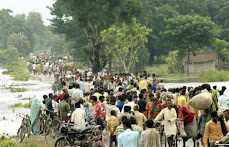
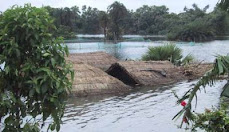
But it would be a grave mistake to regard the destruction by the Kosi river in Bihar as ‘just’ another flood. One of the major tributaries of the Ganga, Kosi is often called the Sorrow of Bihar because of frequent floods and changes in its course. However, what transpired since the embankment collapsed was no ordinary flood. The river impetuously traced a new course, across fields and dense settlements for 150 kilometres, often 15 to 20 kilometres wide. Its untamed waters swept away more than 300,000 houses in 980 villages in the districts of Supaul, Madhepura, Saharsa, Araria and Purnea. It destroyed standing crops of paddy, wheat and vegetables in 110,000 hectares of fertile land. An estimated 3.2 million people lost their homes and livelihood, many times more than in any natural disaster in the country in recent history.
The loss of life has been fortunately small for a disaster of this scale. The government estimates are that 194 people died in the floods, although the figures are hotly contested. But even if the numbers of the dead swell manifold with evidence of missing and drowned people burgeoning over time, it will still be far below the levels of other national natural disasters of the past decade, such as the Orissa super-cyclone of 1999, the Gujarat earthquake of 2001 and the tsunami of 2004, in each of which deaths mounted to tens of thousands of people. But the devastation of homes and livelihood by the wayward river far surpasses the worst of these other disasters.
These are people who had never faced floods in their lifetime because there was no river near their homes to flood its banks. As they incredulously saw with terror the raging waters of the unfamiliar river enter their villages and fields, many declared that this was no flood; they were witnessing pralay or the destruction of the world predicted in the scriptures. In regions with no history of floods, there were no country boats and motor boats for rescue locally available. These had to be requisitioned from other districts, and military, paramilitary and the civil authorities launched one of the largest evacuation operations ever, rescuing hundreds of thousands of people who had taken shelter on embankments, canal walls and the roofs of homes that were still standing.
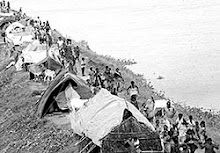
More than 400,000 women, men and children were housed in relief camps in tents and school and college buildings, whereas others took refuge with relatives and some even left the state. Given the enormous scale of devastation, and relatively very small assistance from international and national humanitarian agencies, the state administration has managed to house large dispossessed populations in orderly camps, with arrangements for food, milk and schooling for the children. Winter will come with fresh challenges for camp residents.
However, as the flood waters have begun to recede, we found that anxious villagers are gradually leaving the camps for their villages, to assess their losses, protect what may be left of their homes and possessions, and pick up the string of their lives. Apart from almost an unprecedented scale of devastation and severe constraints of resources and the impoverishment of the affected people, the greatest impediment is the uncertainty over the future course that the capricious river may choose to take in the years to come. It is being debated among experts whether neglect and corruption in the maintenance of the embankment caused the destructive breach, or whether the design of the embankment was itself intrinsically defective and this was a disaster waiting to happen.
Villagers seek one guarantee from the authorities before they rebuild their homes and try to reclaim their lands and livelihood, and that is that the waters of the river Kosi will not return to their villages in the coming years. But officials off the record affirm that they are unable to provide any such assurance.
The challenges of reconstruction are aggravated further by the fact that the people affected include some of the most chronically indigent in the country, and one of the most unequal and divided societies. Caste and patriarchy made themselves felt even in the orderly government relief camps, where people of disadvantaged castes, single women and old people were denied scarce relief assistance. The majority are landless or unrecorded tenants, and with the landlords’ fields silted over, there is little prospect of work and food unless the government gears itself for massive wage employment public works.
Farms in Punjab may be their only hope for oppressed survival, but they fear that if they leave Bihar, they may miss out on the little relief the government may offer. Even a few thousand rupees are a small fortune for people who survive on nothing. There is a grave danger of the trafficking of children in these areas because of extreme poverty and family distress, or their dropping out of school into child labour. In the face of a human tragedy of this scale, it would be unconscionable for the country to simply look the other way.
Harsh Mander
October 27, 2008 , Hindustan Times
But it would be a grave mistake to regard the destruction by the Kosi river in Bihar as ‘just’ another flood. One of the major tributaries of the Ganga, Kosi is often called the Sorrow of Bihar because of frequent floods and changes in its course. However, what transpired since the embankment collapsed was no ordinary flood. The river impetuously traced a new course, across fields and dense settlements for 150 kilometres, often 15 to 20 kilometres wide. Its untamed waters swept away more than 300,000 houses in 980 villages in the districts of Supaul, Madhepura, Saharsa, Araria and Purnea. It destroyed standing crops of paddy, wheat and vegetables in 110,000 hectares of fertile land. An estimated 3.2 million people lost their homes and livelihood, many times more than in any natural disaster in the country in recent history.
The loss of life has been fortunately small for a disaster of this scale. The government estimates are that 194 people died in the floods, although the figures are hotly contested. But even if the numbers of the dead swell manifold with evidence of missing and drowned people burgeoning over time, it will still be far below the levels of other national natural disasters of the past decade, such as the Orissa super-cyclone of 1999, the Gujarat earthquake of 2001 and the tsunami of 2004, in each of which deaths mounted to tens of thousands of people. But the devastation of homes and livelihood by the wayward river far surpasses the worst of these other disasters.
These are people who had never faced floods in their lifetime because there was no river near their homes to flood its banks. As they incredulously saw with terror the raging waters of the unfamiliar river enter their villages and fields, many declared that this was no flood; they were witnessing pralay or the destruction of the world predicted in the scriptures. In regions with no history of floods, there were no country boats and motor boats for rescue locally available. These had to be requisitioned from other districts, and military, paramilitary and the civil authorities launched one of the largest evacuation operations ever, rescuing hundreds of thousands of people who had taken shelter on embankments, canal walls and the roofs of homes that were still standing.
More than 400,000 women, men and children were housed in relief camps in tents and school and college buildings, whereas others took refuge with relatives and some even left the state. Given the enormous scale of devastation, and relatively very small assistance from international and national humanitarian agencies, the state administration has managed to house large dispossessed populations in orderly camps, with arrangements for food, milk and schooling for the children. Winter will come with fresh challenges for camp residents.
However, as the flood waters have begun to recede, we found that anxious villagers are gradually leaving the camps for their villages, to assess their losses, protect what may be left of their homes and possessions, and pick up the string of their lives. Apart from almost an unprecedented scale of devastation and severe constraints of resources and the impoverishment of the affected people, the greatest impediment is the uncertainty over the future course that the capricious river may choose to take in the years to come. It is being debated among experts whether neglect and corruption in the maintenance of the embankment caused the destructive breach, or whether the design of the embankment was itself intrinsically defective and this was a disaster waiting to happen.
Villagers seek one guarantee from the authorities before they rebuild their homes and try to reclaim their lands and livelihood, and that is that the waters of the river Kosi will not return to their villages in the coming years. But officials off the record affirm that they are unable to provide any such assurance.
The challenges of reconstruction are aggravated further by the fact that the people affected include some of the most chronically indigent in the country, and one of the most unequal and divided societies. Caste and patriarchy made themselves felt even in the orderly government relief camps, where people of disadvantaged castes, single women and old people were denied scarce relief assistance. The majority are landless or unrecorded tenants, and with the landlords’ fields silted over, there is little prospect of work and food unless the government gears itself for massive wage employment public works.
Farms in Punjab may be their only hope for oppressed survival, but they fear that if they leave Bihar, they may miss out on the little relief the government may offer. Even a few thousand rupees are a small fortune for people who survive on nothing. There is a grave danger of the trafficking of children in these areas because of extreme poverty and family distress, or their dropping out of school into child labour. In the face of a human tragedy of this scale, it would be unconscionable for the country to simply look the other way.
Harsh Mander
October 27, 2008 , Hindustan Times
Saturday, 18 October 2008
Kosi (Mithila) Crisis: "Kusaha Breach and Thereafter"
At a talk & a day long Panel Discussion in Patna on "Kusaha Breach and Thereafter", heated exchanges between pro-"kosi high dam" engineers and proponents of "living with floods" ended with an apparent conclusion that high dams & embankments are less of an engineering interventions and more of a political intervention. On 17 October, on the eve of two months of the Kosi breach, the talk was delivered by Dr Dinesh Kumar Mishra, a well known voice of sanity with regard to Kosi crisis.
Failure of dams as flood control structures has been demonstrated in Orissa, Gujarat, Maharasthra and Jharkhand.
Disaster management and relief centric narrative that has become the dominant factor came in for severe criticism.
A white paper was demanded, while sharing the Hindi version of the Fact Finding Report on Kosi “Kosi “Pralay”: Bhayaavah Aapada Abhi Baaki Hai” sought accountability of Kosi High Level Committee (KHLC) and provide a remedy for the drainage crisis in North Bihar as was promised by the UPA government's Common Minimum Programme. All the activities of KHLC should be put in suspension till the time their liability is fixed and Justice Rajesh Balia Judicial Commission of inquiry set up on September 9, 2008 is completed. The commission’s recommendations must not meet the fate of several dozens of committees and it must recommend criminal charges against acts of omission and commission.
It is noteworthy that Union Water Resources Department Secretary, in a letter to the Bihar Irrigation Secretary on September 24, 2008 has questioned the locus standi of the judicial commission. The letter read: “The Kosi agreement is a bilateral agreement between two sovereign states, India and Nepal, and Bihar is not a party to either 1954 or the 1966 agreement.”
Water and Power Consultation Services (WAPCOS), a central government’s public sector undertaking has provided technical inputs to the Bihar government on possible ways to plug the breach at Kusaha in Nepal.
Participants included victims of embankments who expressed their anguish at the Delhi, Kathmandu and Patna centric deliberations and decision making. They called for a movement against Kosi High Dam, embankments and changing the current course of Kosi.
Amid news reports that Kosi's course will be restored by December 15 and the breach would be plugged by March 31, 2009 citing Kosi Breach Closure Advisory Technical Committee chairman Nilendu Sanyal and Ganga Flood Control Commission chairman R C Jha on 14 October, 2008 to finalise modalities on plugging the breach, some participants were opposed to the repair of the breach in Kusaha. Government must hear the views of these people before undertaking repair works.
Meanwhile, central government has sanctioned Rs 40 crore for the project and Bihar Cabinet has sanctioned Rs 197 crore. Bihar Water Resources Minister Bijendra Yadav has said tenders for the breach closure have been invited and bidding will take place after October 21.
Kosi is an international river and all interventions must show utmost sensitivity that does not bring a bad name to our country. The onus is the central government to avoid a situation which makes our country a laughing stock for mismanagement of rivers.
It emerged from the discussions that a list of "what not to do in Kosi basin" must be prepared before relying on the suggestions of retired and tired officials like Nilendu Sanyal and his ilk. Post-retirement enlightenment of engineers has more to do with their own rehabilitation less to do with kosi victims welfare.
People of Kosi basin are victims of development and the arrogance of governmental knowledge that are used to scare common people into silence and submission by their declarations such as "I Know the facts".
From K L Rao, Kanwar Sen, K N Lal to Nilendu Sanyal all of them gave flood control solutions...people in Kosi basin are victims of their solution.
Dr Mishra explained why Kosi has been flowing at a level higher than its adjoining mainland. The reduced cross-section of the river due to embankments was expected to facilitate the dredging of its bed. Instead, the Kosi offloaded silt into the river and raised the level of its bed. That the Kosi is among one of the highest silt-laden rivers in the country makes matters worse. Had the river been free to meander, it would have deposited fertile silt, collected from the slopes of Mount Everest and Kanchenjunga, across the plains of north Bihar. But that was not to be, as most of the silt carried over the years lies trapped between river banks, reducing the stream flow on the one hand and making the embankments vulnerable to breach on the other.
He also revisited historical records and official documents arguing that floods caused by this river are not man-made, they are devil-made. Devils being the nexus between politician-engineer-contractors that feeds on the status quo.
Participants included Himanshu Thakkar, Sudhirendar Sharma, Gopal Krishna, Arvind Chaudhary, Kuber Nath Lal, K P Kesari, R K Singh, S K Sinha, Ram Chandra Khan, Shaibal Gupta, PP Ghosh, Rakesh Bhatt, Vijayji, Shivanand Bhai, C P Sinha, C Uday Bhaskar, V N Sharma, RK Sinha, A K Verma, N Sharma, B Singh, Chandrashekhar, T Prasad, Kavindra Pandey, Prem Kumar Verma, Raj Ballabh and several others.
Kosi is synonymous with the history, culture of not only Mithila but whole of the Indian sub-continent. One cannot think of the Indian sub-continent without thinking about Ramayana (Sita) and Mahabharata (Karna). Ramayana and Mahabharata cannot be even imagined in the absence of Mithila. The structural solutions have already distorted the landscape of the Kosi-Mithila region, Kosi High Dam would turn out to be a monument of foolishness for generations to come. Like the villains of embankment proposal, all the kosi high dam proponents must be identified and dealt with by something like a Kosi Sansad.
The proposal to raise a 269-meter-high dam in Sunakhambi Khola on the Sapta Kosi river, 5 km north of Barahachhetra temple in Sunsari district appeared to be an unsound proposition of people who are caught in a time warp. Proposed "Sapta Kosi Multi Purpose Project" claims to irrigate 68,450 hectares in Nepal and provide remedy for drought-prone areas measuring 1,520,000 hectares in India. It is claimed that alongwith irrigation and flood control, about 3,500 MW of electrical power would also be generated from water stored in the 269-meter-high reservoir.
According to a preliminary impact study, the proposed high dam will displace 75,000 people from about 79 Village Development Committees (VDCs) in nine districts of Nepal alone. About 111 settlements in the 79 VDCs, sprawling over the banks of the Sun Kosi, Tamor, and Arun rivers, will be totally submerged, while 47 settlements will face partial submergence, and 138 will become fractionally submerged.
Opinions available in public domain say, "If the dam is going to cause such upheaval, can the crops produced from the 68,450 hectares of irrigated land in Nepal compensate for this huge loss?" argued the bimonthly magazine, Pro Public/Good Governance, in its report. Estimated losses in the North Bihar are yet to be ascertained.
Elsewhere on the web Vinay Jha, Editor, Mithila Times argues that the kosi High Dam is actually a population-control plan by the government; a dam break in an earthquake prone zone will eradicate poverty in a vast region by eradicating the poor. Narural flow of rivers and natural habitats must not be tampered with, which we must maintain if we want life to exist on Earth. Instead of a gigantic dam, what we need is a gigantic network of very small scale water management schemes, including a vast network of small dams in Himalayas. But Indian officials can never think or manage such schemes.
Earlier, the meeting of the Indo-Nepal Joint Committee on Water Resources in Kathmandu on October 2, 2008 agreed to expedite work on preparation of the Detailed Project Report (DPR) on Saptkosi High Dam on the Kosi.
Both sides reiterated their commitment to expediting the work on preparation of the DPR of Saptkosi High Dam project during the meeting which concluded on Wednesday in Kathmandu. Nepal assured full administrative support and security to Indian engineers.
After the breach, on August 18-19, 2008 Nepal government had said that Kosi treaty is a "historic blunder" but Nepal government's inconsistent and ambiguous position now on the Kosi High Dam proposal based on the same treaty must be exposed in the Nepali parliament and media.
In order to save Kosi region from an ecological and human disaster, Nepali and Indian legislators must take a categorical position based on a referendum on Kosi.
Gopal Krishna
Solution to floods: New paradigm needed
Md Khalequzzaman, The Daily Star, 2008-10-11
Bangladesh
Following the recent devastating floods in North Bihar, the Deputy Chairman of the Indian Planning Commission Montek Singh Ahluwali said in an interview, “the flood caused by the Kosi in Bihar underlies the need for storing water by building dams or barrages. Since the issue involves Nepal, vigorous diplomatic efforts are needed.” He also said that he did not see any other visible solution. It is a sorry state of affairs that the Planning Commission of India is still trapped within a failed paradigm of engineering and structural solution to a natural process, namely flooding. How long will it take for our policy makers to realize that flooding is a natural process, and it can't be "managed”?
We cannot defy the nature, we need to live in harmony with it. A recent fact finding report for the Kosi floods of 2008, prepared by a civil society organization under the leadership of Dr. Sudhir Sharma, Dr. Dinesh Mishra, and Gopal Krishna of India, highlighted that although India has built over 3000 km of embankments in Bihar over the last few decades, the flooding propensity has increased by 2.5 times during the same time period, not to mention that embankments failed during each major flooding event. Embankments provide a false sense of security to people living behind them. It has been proved time and again that no matter how strong the embankments are, and no matter who builds them (US, India, the Netherlands, China, Bangladesh, you just name it) they are destined to fail.
Every time there is a flood in Bihar or Assam, the people living downstream in Bangladesh get worried, since it take only a few days for flood waters in upstream regions to roll downstream in Bangladesh. However, the Kosi flood of 2008 revealed an interesting fact. Although parts of Bangladesh are located directly downstream of the Kosi confluence with the Ganges (called Padma in Bangladesh), no major floods occurred in those downstream areas following the deluge in North Bihar in mid August. Analyses of the data for river monitoring stations in the Padma at Pankha, which is located downstream of Farakka, showed that the stage of the river did not rise significantly following the floods in Bihar. The question that begs answer is why the flood in Bihar did not contribute to increased flow in the Padma in Bangladesh?
The answer lies in the underlying causes of flooding in Bihar. The breaching of embankment on the Kosi river allowed the flood waters to spread over the floodplains in North Bihar, resulting in reduced velocity and volume of flood waters that enter the Padma in Bangladesh. In addition, at the time of breaching, the flow of Kosi was only 1.4 lakh cusec, which is not an unusual flow during the monsoon period. The flood in Bihar was an unexpected phenomenon for the people living behind the embankments since they had a false sense of security. If the embankments were absent on either sides of the Kosi, the flow that caused a deluge in northern districts of Bihar probably would be an ordinary “two-day- flood” that would spread over wider floodplain areas in Nepal and Bihar, and would not cause any misery for select group of people who happened to be in the wrong place (downstream of where the embankments broke in Nepal) at the wrong time (August 18 and afterwards).
Despite an increase in investments for construction of embankments and other flood control measures, the intensity and magnitude of flooding have increased substantially in all co-riparian countries (Nepal, India and Bangladesh) within the Ganges-Brahmaputra-Meghna (GBM) basin in recent decades. All countries in the GBM basin are looking for solutions to flood damage to their economy and lives. However, so far there has been a minimum amount of involvement among co-riparian nations to tackle this common problem. All countries are working in isolation or in a bilateral manner to solve a problem that requires participation by all stakeholders living in the GBM basin. India, being the largest power and strategically located, needs to provide leadership role among the co-riparian nations (China, Nepal, Bhutan, India, and Bangladesh) and devise an integrated water resources management (IWRM) plan for the GBM basin.
The IWRM plan will require adaptation of a new paradigm that embraces an ecological approach to reducing flood damage through implementation of best management practices in land-uses in the entire basin (from the source to mouth of these mighty rivers). All people living in the floodplain of the GBM basin need to find a way to reduce land erosion and deforestation. Should they build on the floodplains, they need to adapt new construction standards that facilitate floodwaters flow under their houses, or be prepared to evacuate to higher grounds during high flow events. Drainage congestion due to urbanization and other land-use changes that increase surface run-off and reduce infiltration is another reason for increased flooding in the region. Widening of natural drainage network through dredging in proportion to the amount of urbanization, and increasing efficiency of storm sewage system in urban centers will be essential to avoid water-logging and flooding.
All stakeholders living in a watershed area, regardless of their political boundaries -- need to work together, there are no other alternatives. The planner and decision makers in the basin countries can hide their face in the sand hoping that flooding will not occur again, but such wishful thinking will not stop floods or reduce damage to economy and the environment. Humans will have to make room for rivers to spread during flooding, because floodplains have been an integral part of any natural rivers for millions of years; whereas human invasion to floodplains and interference with the natural flow have been a relatively new phenomenon. Every time humans decide to change natural forces to meet their needs, it becomes a duty for them to study the laws of nature and abide by them. Sooner we realize that humans cannot defy the nature, we can only live in harmony with it, better it will be for the humanity, because natural forces will always outweigh any human endeavour. Rivers flowing over to floodplains is one of such natural laws.
Md Khalequzzaman is a member of the Bangla-desh Environment Network (BEN)
Failure of dams as flood control structures has been demonstrated in Orissa, Gujarat, Maharasthra and Jharkhand.
Disaster management and relief centric narrative that has become the dominant factor came in for severe criticism.
A white paper was demanded, while sharing the Hindi version of the Fact Finding Report on Kosi “Kosi “Pralay”: Bhayaavah Aapada Abhi Baaki Hai” sought accountability of Kosi High Level Committee (KHLC) and provide a remedy for the drainage crisis in North Bihar as was promised by the UPA government's Common Minimum Programme. All the activities of KHLC should be put in suspension till the time their liability is fixed and Justice Rajesh Balia Judicial Commission of inquiry set up on September 9, 2008 is completed. The commission’s recommendations must not meet the fate of several dozens of committees and it must recommend criminal charges against acts of omission and commission.
It is noteworthy that Union Water Resources Department Secretary, in a letter to the Bihar Irrigation Secretary on September 24, 2008 has questioned the locus standi of the judicial commission. The letter read: “The Kosi agreement is a bilateral agreement between two sovereign states, India and Nepal, and Bihar is not a party to either 1954 or the 1966 agreement.”
Water and Power Consultation Services (WAPCOS), a central government’s public sector undertaking has provided technical inputs to the Bihar government on possible ways to plug the breach at Kusaha in Nepal.
Participants included victims of embankments who expressed their anguish at the Delhi, Kathmandu and Patna centric deliberations and decision making. They called for a movement against Kosi High Dam, embankments and changing the current course of Kosi.
Amid news reports that Kosi's course will be restored by December 15 and the breach would be plugged by March 31, 2009 citing Kosi Breach Closure Advisory Technical Committee chairman Nilendu Sanyal and Ganga Flood Control Commission chairman R C Jha on 14 October, 2008 to finalise modalities on plugging the breach, some participants were opposed to the repair of the breach in Kusaha. Government must hear the views of these people before undertaking repair works.
Meanwhile, central government has sanctioned Rs 40 crore for the project and Bihar Cabinet has sanctioned Rs 197 crore. Bihar Water Resources Minister Bijendra Yadav has said tenders for the breach closure have been invited and bidding will take place after October 21.
Kosi is an international river and all interventions must show utmost sensitivity that does not bring a bad name to our country. The onus is the central government to avoid a situation which makes our country a laughing stock for mismanagement of rivers.
It emerged from the discussions that a list of "what not to do in Kosi basin" must be prepared before relying on the suggestions of retired and tired officials like Nilendu Sanyal and his ilk. Post-retirement enlightenment of engineers has more to do with their own rehabilitation less to do with kosi victims welfare.
People of Kosi basin are victims of development and the arrogance of governmental knowledge that are used to scare common people into silence and submission by their declarations such as "I Know the facts".
From K L Rao, Kanwar Sen, K N Lal to Nilendu Sanyal all of them gave flood control solutions...people in Kosi basin are victims of their solution.
Dr Mishra explained why Kosi has been flowing at a level higher than its adjoining mainland. The reduced cross-section of the river due to embankments was expected to facilitate the dredging of its bed. Instead, the Kosi offloaded silt into the river and raised the level of its bed. That the Kosi is among one of the highest silt-laden rivers in the country makes matters worse. Had the river been free to meander, it would have deposited fertile silt, collected from the slopes of Mount Everest and Kanchenjunga, across the plains of north Bihar. But that was not to be, as most of the silt carried over the years lies trapped between river banks, reducing the stream flow on the one hand and making the embankments vulnerable to breach on the other.
He also revisited historical records and official documents arguing that floods caused by this river are not man-made, they are devil-made. Devils being the nexus between politician-engineer-contractors that feeds on the status quo.
Participants included Himanshu Thakkar, Sudhirendar Sharma, Gopal Krishna, Arvind Chaudhary, Kuber Nath Lal, K P Kesari, R K Singh, S K Sinha, Ram Chandra Khan, Shaibal Gupta, PP Ghosh, Rakesh Bhatt, Vijayji, Shivanand Bhai, C P Sinha, C Uday Bhaskar, V N Sharma, RK Sinha, A K Verma, N Sharma, B Singh, Chandrashekhar, T Prasad, Kavindra Pandey, Prem Kumar Verma, Raj Ballabh and several others.
Kosi is synonymous with the history, culture of not only Mithila but whole of the Indian sub-continent. One cannot think of the Indian sub-continent without thinking about Ramayana (Sita) and Mahabharata (Karna). Ramayana and Mahabharata cannot be even imagined in the absence of Mithila. The structural solutions have already distorted the landscape of the Kosi-Mithila region, Kosi High Dam would turn out to be a monument of foolishness for generations to come. Like the villains of embankment proposal, all the kosi high dam proponents must be identified and dealt with by something like a Kosi Sansad.
The proposal to raise a 269-meter-high dam in Sunakhambi Khola on the Sapta Kosi river, 5 km north of Barahachhetra temple in Sunsari district appeared to be an unsound proposition of people who are caught in a time warp. Proposed "Sapta Kosi Multi Purpose Project" claims to irrigate 68,450 hectares in Nepal and provide remedy for drought-prone areas measuring 1,520,000 hectares in India. It is claimed that alongwith irrigation and flood control, about 3,500 MW of electrical power would also be generated from water stored in the 269-meter-high reservoir.
According to a preliminary impact study, the proposed high dam will displace 75,000 people from about 79 Village Development Committees (VDCs) in nine districts of Nepal alone. About 111 settlements in the 79 VDCs, sprawling over the banks of the Sun Kosi, Tamor, and Arun rivers, will be totally submerged, while 47 settlements will face partial submergence, and 138 will become fractionally submerged.
Opinions available in public domain say, "If the dam is going to cause such upheaval, can the crops produced from the 68,450 hectares of irrigated land in Nepal compensate for this huge loss?" argued the bimonthly magazine, Pro Public/Good Governance, in its report. Estimated losses in the North Bihar are yet to be ascertained.
Elsewhere on the web Vinay Jha, Editor, Mithila Times argues that the kosi High Dam is actually a population-control plan by the government; a dam break in an earthquake prone zone will eradicate poverty in a vast region by eradicating the poor. Narural flow of rivers and natural habitats must not be tampered with, which we must maintain if we want life to exist on Earth. Instead of a gigantic dam, what we need is a gigantic network of very small scale water management schemes, including a vast network of small dams in Himalayas. But Indian officials can never think or manage such schemes.
Earlier, the meeting of the Indo-Nepal Joint Committee on Water Resources in Kathmandu on October 2, 2008 agreed to expedite work on preparation of the Detailed Project Report (DPR) on Saptkosi High Dam on the Kosi.
Both sides reiterated their commitment to expediting the work on preparation of the DPR of Saptkosi High Dam project during the meeting which concluded on Wednesday in Kathmandu. Nepal assured full administrative support and security to Indian engineers.
After the breach, on August 18-19, 2008 Nepal government had said that Kosi treaty is a "historic blunder" but Nepal government's inconsistent and ambiguous position now on the Kosi High Dam proposal based on the same treaty must be exposed in the Nepali parliament and media.
In order to save Kosi region from an ecological and human disaster, Nepali and Indian legislators must take a categorical position based on a referendum on Kosi.
Gopal Krishna
Solution to floods: New paradigm needed
Md Khalequzzaman, The Daily Star, 2008-10-11
Bangladesh
Following the recent devastating floods in North Bihar, the Deputy Chairman of the Indian Planning Commission Montek Singh Ahluwali said in an interview, “the flood caused by the Kosi in Bihar underlies the need for storing water by building dams or barrages. Since the issue involves Nepal, vigorous diplomatic efforts are needed.” He also said that he did not see any other visible solution. It is a sorry state of affairs that the Planning Commission of India is still trapped within a failed paradigm of engineering and structural solution to a natural process, namely flooding. How long will it take for our policy makers to realize that flooding is a natural process, and it can't be "managed”?
We cannot defy the nature, we need to live in harmony with it. A recent fact finding report for the Kosi floods of 2008, prepared by a civil society organization under the leadership of Dr. Sudhir Sharma, Dr. Dinesh Mishra, and Gopal Krishna of India, highlighted that although India has built over 3000 km of embankments in Bihar over the last few decades, the flooding propensity has increased by 2.5 times during the same time period, not to mention that embankments failed during each major flooding event. Embankments provide a false sense of security to people living behind them. It has been proved time and again that no matter how strong the embankments are, and no matter who builds them (US, India, the Netherlands, China, Bangladesh, you just name it) they are destined to fail.
Every time there is a flood in Bihar or Assam, the people living downstream in Bangladesh get worried, since it take only a few days for flood waters in upstream regions to roll downstream in Bangladesh. However, the Kosi flood of 2008 revealed an interesting fact. Although parts of Bangladesh are located directly downstream of the Kosi confluence with the Ganges (called Padma in Bangladesh), no major floods occurred in those downstream areas following the deluge in North Bihar in mid August. Analyses of the data for river monitoring stations in the Padma at Pankha, which is located downstream of Farakka, showed that the stage of the river did not rise significantly following the floods in Bihar. The question that begs answer is why the flood in Bihar did not contribute to increased flow in the Padma in Bangladesh?
The answer lies in the underlying causes of flooding in Bihar. The breaching of embankment on the Kosi river allowed the flood waters to spread over the floodplains in North Bihar, resulting in reduced velocity and volume of flood waters that enter the Padma in Bangladesh. In addition, at the time of breaching, the flow of Kosi was only 1.4 lakh cusec, which is not an unusual flow during the monsoon period. The flood in Bihar was an unexpected phenomenon for the people living behind the embankments since they had a false sense of security. If the embankments were absent on either sides of the Kosi, the flow that caused a deluge in northern districts of Bihar probably would be an ordinary “two-day- flood” that would spread over wider floodplain areas in Nepal and Bihar, and would not cause any misery for select group of people who happened to be in the wrong place (downstream of where the embankments broke in Nepal) at the wrong time (August 18 and afterwards).
Despite an increase in investments for construction of embankments and other flood control measures, the intensity and magnitude of flooding have increased substantially in all co-riparian countries (Nepal, India and Bangladesh) within the Ganges-Brahmaputra-Meghna (GBM) basin in recent decades. All countries in the GBM basin are looking for solutions to flood damage to their economy and lives. However, so far there has been a minimum amount of involvement among co-riparian nations to tackle this common problem. All countries are working in isolation or in a bilateral manner to solve a problem that requires participation by all stakeholders living in the GBM basin. India, being the largest power and strategically located, needs to provide leadership role among the co-riparian nations (China, Nepal, Bhutan, India, and Bangladesh) and devise an integrated water resources management (IWRM) plan for the GBM basin.
The IWRM plan will require adaptation of a new paradigm that embraces an ecological approach to reducing flood damage through implementation of best management practices in land-uses in the entire basin (from the source to mouth of these mighty rivers). All people living in the floodplain of the GBM basin need to find a way to reduce land erosion and deforestation. Should they build on the floodplains, they need to adapt new construction standards that facilitate floodwaters flow under their houses, or be prepared to evacuate to higher grounds during high flow events. Drainage congestion due to urbanization and other land-use changes that increase surface run-off and reduce infiltration is another reason for increased flooding in the region. Widening of natural drainage network through dredging in proportion to the amount of urbanization, and increasing efficiency of storm sewage system in urban centers will be essential to avoid water-logging and flooding.
All stakeholders living in a watershed area, regardless of their political boundaries -- need to work together, there are no other alternatives. The planner and decision makers in the basin countries can hide their face in the sand hoping that flooding will not occur again, but such wishful thinking will not stop floods or reduce damage to economy and the environment. Humans will have to make room for rivers to spread during flooding, because floodplains have been an integral part of any natural rivers for millions of years; whereas human invasion to floodplains and interference with the natural flow have been a relatively new phenomenon. Every time humans decide to change natural forces to meet their needs, it becomes a duty for them to study the laws of nature and abide by them. Sooner we realize that humans cannot defy the nature, we can only live in harmony with it, better it will be for the humanity, because natural forces will always outweigh any human endeavour. Rivers flowing over to floodplains is one of such natural laws.
Md Khalequzzaman is a member of the Bangla-desh Environment Network (BEN)
Tuesday, 23 September 2008
The Worst Is Yet To Come
Why, after 60 years of band-aid remedies for the Kosi, is there no lasting
solution yet, asks GOPAL KRISHNA
ON AUGUST 19, 2008, the chairman of the Expert Committee on the Implementation
of recommendations of Rashtriya Barh Ayog, R Rangachari said, “It is my
impression that not much has been done to implement the suggestions made by the
committee’s report.” Rangachari was on the Prime Minister’s Task Force on Flood
Control in 2004.
The National Common Minimum Programme (CMP) of the Government of India made a
solemn pledge to the people of the country in 2004 to undertake “Long-pending
schemes in specific states that have national significance, like flood control
and drainage in North Bihar.” Despite acknowledging the problem, it is shocking
that neither the Central nor Bihar Government conducts any survey to assess the
effect of flood control measures on the socio-economic conditions of society.
On August 20, 2008, after the breach in the embankment at Kusaha in the Kosi
region, Nepalese Prime Minister Pushpa Kamal Dahal `Prachanda’, took stock of
the post-calamity situation in the Kosi region and said “Kosi agreement was a
historic blunder. The people are suffering due to this”. The agreement had led
to the construction of embankments and proposals for a high dam.
Following an aerial survey of the flood affected areas of Bihar, the Indian
Prime Minister on August 28, 2008, termed the flood crisis as “a national
calamity”. More than four years have passed since the Indian Prime Minister made
the promise in the CMP. Now, in August 2008 he declared, “A high-level team
would be set up to coordinate matters with the Government of Nepal.” He also
promised protective structures and technical assistance to state government to
prevent further deterioration in the embankments. Such dangling of carrots and
providing band-aid remedies are horribly insincere and it has been going on for
over 60 years.
Bihar’s floods in August 2008 caused the eighth breach in the embankments.
According to the Bihar Government’s own reports, last year 48 lakh people in 22
districts were in need of assistance due to floods. Clearly, it is not the
extent, but the unpredictable intensity of the crisis that makes it a
catastrophe. The primary function of floodwater is to drain out excess water. It
has not been allowed to perform its functions due to engineering interventions.
Hundreds of reports prepared by Commissions of all ilks are gathering dust. At
most, they become election campaign tools. The Commission should recommend
fixing charges of criminal neglect against the members of the Kosi High-Level
Committee, who waited for the calamity despite having information that could
have led to timely evacuation of the people.
The drainage problem has failed to alter the policy regime of the country that
favours structural solutions regardless of the natural drainage it may impede.
Proposals like a high dam on the Kosi are as good as jumping from the frying pan
into the fire, if the experience with embankments is anything to go by. Even
when one chooses to ignore the changing morphology of the river, the estimated
lifespan of a dam and embankment being 25 and 37 years respectively, underlines
the transitory nature of the technocentric interventions. The Union Ministry of
Water Resources misled the Rajya Sabha on March 11, 2008 claiming, “Government
has taken various steps in the direction of water management to stop the flood
in north Bihar coming from the rivers of Nepal.” There has been no significant
shift in the way the Kosi issue was perceived in the 1950s and in 2008.
The issue of the Kosi High Dam, first raised in 1948, has been sold to the
victims as one of the ‘permanent’ solutions to recurring floods. Ironically,
embankments as temporary solutions have become reasonably permanent whereas the
‘permanent’ solution has remained elusive. What is ‘permanent’ and how permanent
is ‘permanence’? It must be acknowledged now that there is a condemnable
insincerity in proposing multi-purpose high dams for flood control, because the
dams are proposed to tap the hydropower potential. Is it not clear that when the
multipurpose — flood control, irrigation and power — dam is talked about, the
real motive of the proposal in question is ignored? Clearly, political parties
hold a stake in such power projects that make them little concernend with the
masses struggling to remain afloat. A few days ago, Nepalese Prime Minister,
Prachanda, conveyed his affirmation for the hydel power project in a meeting
with Bihar Chief Minister Nitish Kumar at a lunch hosted by JD(U) leader Sharad
Yadav.
THERE IS a compelling logic behind seeking immediate review of the Indo- Nepal
Kosi Treaty that created the rationale for embankments and dams. Continuing with
it would amount to flogging a dead horse. The congestion in North Bihar and
Nepal is a problem of permanent water-logging that has remained overlooked for
several decades. Floods, earthquakes, hurricanes or tsunamis cannot be
controlled. But the catastrophe they cause can be predicted, anticipated and
prevented. Drainage of the river must remain sacrosanct, besides timely
evacuation of human and animal population and the establishment of robust public
health systems.
Given its distinct geo-morphological features and complicated hydrological
characters, the Kosi is one of the Himalayan rivers that has yet to be
understood in its entirety. It is high time that policy makers gave up their
outdated ‘conquest over nature’ paradigm. We have to learn to live with the
floods, only this time, in far more readiness.
(Gopal Krishna is a member of the fact finding misson on the Kosi in Bihar and
Nepal)
From Tehelka Magazine, Vol 5, Issue 38, Dated Sept 27, 2008
Of Deluge, Candles and Matchboxes
by Dinesh Kumar Mishra
The foundation stone of the Kosi Project was laid on January 14, 1955 amidst fanfare, jubilation and victory. Dr. Shrikrishna Sinha, thgen Chief Minister of Bihar, laid the foundation stone near Bhutaha village close to Nirmali, in Saharsa (now Supaul) district with the chanting of mantras by Pt. Mahabir Jha of Jhitki village and shouting of slogans like 'Aadhi Roti Khayengein, Kosi Bandh Banaayengein.' (We will eat only half a chapati but we will surely build the Kosi embankments). A majority of people lost the other half of the bread too on the 18th August 2008 when the Kosi embankment breached on that day.
Col. Townsend of the US Army while deliberating in a seminar organized by the American Society of Civil Engineers to discuss the Mississippi floods of 1927 had said that even the best designed and carefully constructed embankments remain at the mercy of burrowing animals like rats, foxes, muskrats who can create a hole in the finest levee that has been devised, which if not closed within a few moments will ensure its destruction. The Mississippi River of the United States broke loose in 1927 inundating an area of 51,200 sq. kilometer and damaging property to an estimated extent of two hundred million to a billion dollars. The breaches drove nearly three quarters of a million people from their homes and six hundred thousand of them were dependant on Red Cross. The wealth and power of the United States enabled much to be done for the sufferers, still they suffered. He further added a 'careless supervisor and dark nights' to the list destroyers of embankments. His observations remain valid till date as the Kosi comes out of its shackles in Kusaha in Nepal some 13 kilometers upstream of the Kosi Barrage. All the eight breaches that have occurred so far can be brought under these categories.
Col. Townsend gave benefit of doubt to the planners and engineers when he prefixed 'best designed and carefully constructed' adjectives to the embankments. The Kosi has breached its embankment eighth time and it is for the first time that the 'disaster' has generated so much of interest. These embankments are spaced at an average distance of 9 to 10 kilometers below the barrage with a maximum width of 16 kilometres between Kisunipatti and Bhaptiahi and minimum width of nearly 3 kilometres at the barrage itself. The spacing of the embankments is only 8 kilometres at the tail end, between Baluaha Ghat and Ghonghepur. In Nepal portion the spacing between them is restricted to between 3 to 6 kilometers. Common sense suggests that the spacing between the embankments should increase as the river advances further as more and more streams join the river from western side. This simple common sense was kicked around when these embankments were constructed in late 1950s. There were 304 villages with a population of 192,000 (1951 census) going to be trapped between the embankments and each one of them was trying to be located outside the embankments. Later the embankments were extended and 380 villages of Bihar and 34 villages of Nepal came within them. Their current population is nearly 1.2 million. The village locations were fixed and it was the embankment on either side of the river that could be moved. So did it happen. Now the embankment alignment is a caricature of what it was designed, if there was any design.
Chinese Deputy Prime Minister Teng Tse Hui discussing the floods in the Hwang Ho had once said in 1955 that according to historical records, there have been inundations and breaches on 1500 or more occasions on the lower reaches of the river and there were 26 important changes of course, nine of them major…..The terrible floods of 1933 caused more than 50 breaches of the dykes and brought disaster to more than 11,000sq. km. Over 3,640,000 people were affected and over 18,000 killed. Property worth some 230 million Yuans was lost. In 1938, Chiang Kai Shek Government opened the dykes on the south bank of the river at Huayuan Kou near Cheng Chow in Honan province. This led to a major change in the course of the river affecting 54,000 sq. km. with a population of 12,500,000 and 890,000 people died….In a hundred years, from 1855 till 1955, the dykes had breached on 200 occasions. According to an on the spot survey in the river bed in lower reaches was found to be rising by one to ten centimeters every year in the middle of this century. In some cases the existing river bank was found even ten meters higher than the surrounding country level. Such rapid silting cannot be dealt with simply by piling up and reinforcing dykes. In a sense, higher and stronger the dykes, the quicker is the silt deposited because it has no way of getting out. The Kosi embankments were constructed citing the wonderful performance of these two rivers.
Had Col. Townsend been living today, he must have amended his statement saying that the embankments could be ill-conceived, ill-designed and poorly constructed too. Capt. G.F. Hall, former Chief Engineer of Bihar was of the opinion that the embankments can only postpone the day of retribution and will be a store of disaster for the future generation. A status paper prepared by Government of Bihar in 2003 suggests that those who subscribe to such views are the people of colonial mindset.
The 'nationalist' embankment builders had a last laugh when they succeeded in bringing Dr. Rajendra Prasad, then President of India' to Bihar between 17th to 22nd October 1954 and made him request the people to participate in the 'yagna' of nation building by constructing the Kosi embankments. His views in the Patna Flood Conference (1937) were diagonally opposite to what he was made to say in 1954. One can imagine the stress the President might have undergone during that trip of his home state of Bihar.
Embankments prevent a river from overflowing its banks during floods but they also prevent the entry of floodwater. This leads to a major problem as the embanked river is no longer able to fulfill its primary function – draining out excess water. With the tributaries prevented from discharging into the river and accumulated rainwater finding no way out, the surrounding areas quickly become flooded. The situation is aggravated by seepage from under the embankments. The areas outside the levees remain waterlogged for months after the rainy season because this water has no way of flowing out to the sea. Theoretically, sluice gates located at these junctions should solve the problem but, in practice, such gates quickly become useless; as the bed level of the main river rises above the surrounding land, operating the gates lets water out instead of allowing outside water in. When the sluice gates have failed, the only option left is to also embank the tributary. This results, then, in water being locked up between the embankments. Moreover, no embankment has yet been built or can be built in future that will not breach. When a breach occurs, there is a deluge. This is what happened at Kusaha this year on the 18th August 2008.
Proponents of embankments have tried to rationalize the jacketing of rivers thus: Forcing the same quantity of water through a narrow area, as happens in case of an embanked river, increase the water velocity thereby increasing its eroding capacity. The increased velocity of water dredges the river bottom and transports the sediment out preventing the rise of riverbed levels, increasing the carrying capacity of the river and reducing the extent of flooding. These were the arguments put forward by engineers in independent India when they resorted to massive embanking of rivers in the Ganga and the Brahmaputra basin. Unfortunately, there has been little evidence to date that this theory is actually being substantiated anywhere on Indian rivers. The technical debate, however, continues at that level.
At the field level in the flooded areas of Bihar, there is a continuing debate on polythene sheets, rice, vegetables, salt, candle and match-boxes etc. How strategic is this deflection of debate that the people discuss keep discussing about sattu (ground gram), chura (flattened rice) candles and matchboxes. This is what precisely the politicians want and if they are not brought to the real issues of dealing with the sediments, floodwaters, accountability and an informed debate; the event would simply pass of as the earlier ones.
The foundation stone of the Kosi Project was laid on January 14, 1955 amidst fanfare, jubilation and victory. Dr. Shrikrishna Sinha, thgen Chief Minister of Bihar, laid the foundation stone near Bhutaha village close to Nirmali, in Saharsa (now Supaul) district with the chanting of mantras by Pt. Mahabir Jha of Jhitki village and shouting of slogans like 'Aadhi Roti Khayengein, Kosi Bandh Banaayengein.' (We will eat only half a chapati but we will surely build the Kosi embankments). A majority of people lost the other half of the bread too on the 18th August 2008 when the Kosi embankment breached on that day.
Col. Townsend of the US Army while deliberating in a seminar organized by the American Society of Civil Engineers to discuss the Mississippi floods of 1927 had said that even the best designed and carefully constructed embankments remain at the mercy of burrowing animals like rats, foxes, muskrats who can create a hole in the finest levee that has been devised, which if not closed within a few moments will ensure its destruction. The Mississippi River of the United States broke loose in 1927 inundating an area of 51,200 sq. kilometer and damaging property to an estimated extent of two hundred million to a billion dollars. The breaches drove nearly three quarters of a million people from their homes and six hundred thousand of them were dependant on Red Cross. The wealth and power of the United States enabled much to be done for the sufferers, still they suffered. He further added a 'careless supervisor and dark nights' to the list destroyers of embankments. His observations remain valid till date as the Kosi comes out of its shackles in Kusaha in Nepal some 13 kilometers upstream of the Kosi Barrage. All the eight breaches that have occurred so far can be brought under these categories.
Col. Townsend gave benefit of doubt to the planners and engineers when he prefixed 'best designed and carefully constructed' adjectives to the embankments. The Kosi has breached its embankment eighth time and it is for the first time that the 'disaster' has generated so much of interest. These embankments are spaced at an average distance of 9 to 10 kilometers below the barrage with a maximum width of 16 kilometres between Kisunipatti and Bhaptiahi and minimum width of nearly 3 kilometres at the barrage itself. The spacing of the embankments is only 8 kilometres at the tail end, between Baluaha Ghat and Ghonghepur. In Nepal portion the spacing between them is restricted to between 3 to 6 kilometers. Common sense suggests that the spacing between the embankments should increase as the river advances further as more and more streams join the river from western side. This simple common sense was kicked around when these embankments were constructed in late 1950s. There were 304 villages with a population of 192,000 (1951 census) going to be trapped between the embankments and each one of them was trying to be located outside the embankments. Later the embankments were extended and 380 villages of Bihar and 34 villages of Nepal came within them. Their current population is nearly 1.2 million. The village locations were fixed and it was the embankment on either side of the river that could be moved. So did it happen. Now the embankment alignment is a caricature of what it was designed, if there was any design.
Chinese Deputy Prime Minister Teng Tse Hui discussing the floods in the Hwang Ho had once said in 1955 that according to historical records, there have been inundations and breaches on 1500 or more occasions on the lower reaches of the river and there were 26 important changes of course, nine of them major…..The terrible floods of 1933 caused more than 50 breaches of the dykes and brought disaster to more than 11,000sq. km. Over 3,640,000 people were affected and over 18,000 killed. Property worth some 230 million Yuans was lost. In 1938, Chiang Kai Shek Government opened the dykes on the south bank of the river at Huayuan Kou near Cheng Chow in Honan province. This led to a major change in the course of the river affecting 54,000 sq. km. with a population of 12,500,000 and 890,000 people died….In a hundred years, from 1855 till 1955, the dykes had breached on 200 occasions. According to an on the spot survey in the river bed in lower reaches was found to be rising by one to ten centimeters every year in the middle of this century. In some cases the existing river bank was found even ten meters higher than the surrounding country level. Such rapid silting cannot be dealt with simply by piling up and reinforcing dykes. In a sense, higher and stronger the dykes, the quicker is the silt deposited because it has no way of getting out. The Kosi embankments were constructed citing the wonderful performance of these two rivers.
Had Col. Townsend been living today, he must have amended his statement saying that the embankments could be ill-conceived, ill-designed and poorly constructed too. Capt. G.F. Hall, former Chief Engineer of Bihar was of the opinion that the embankments can only postpone the day of retribution and will be a store of disaster for the future generation. A status paper prepared by Government of Bihar in 2003 suggests that those who subscribe to such views are the people of colonial mindset.
The 'nationalist' embankment builders had a last laugh when they succeeded in bringing Dr. Rajendra Prasad, then President of India' to Bihar between 17th to 22nd October 1954 and made him request the people to participate in the 'yagna' of nation building by constructing the Kosi embankments. His views in the Patna Flood Conference (1937) were diagonally opposite to what he was made to say in 1954. One can imagine the stress the President might have undergone during that trip of his home state of Bihar.
Embankments prevent a river from overflowing its banks during floods but they also prevent the entry of floodwater. This leads to a major problem as the embanked river is no longer able to fulfill its primary function – draining out excess water. With the tributaries prevented from discharging into the river and accumulated rainwater finding no way out, the surrounding areas quickly become flooded. The situation is aggravated by seepage from under the embankments. The areas outside the levees remain waterlogged for months after the rainy season because this water has no way of flowing out to the sea. Theoretically, sluice gates located at these junctions should solve the problem but, in practice, such gates quickly become useless; as the bed level of the main river rises above the surrounding land, operating the gates lets water out instead of allowing outside water in. When the sluice gates have failed, the only option left is to also embank the tributary. This results, then, in water being locked up between the embankments. Moreover, no embankment has yet been built or can be built in future that will not breach. When a breach occurs, there is a deluge. This is what happened at Kusaha this year on the 18th August 2008.
Proponents of embankments have tried to rationalize the jacketing of rivers thus: Forcing the same quantity of water through a narrow area, as happens in case of an embanked river, increase the water velocity thereby increasing its eroding capacity. The increased velocity of water dredges the river bottom and transports the sediment out preventing the rise of riverbed levels, increasing the carrying capacity of the river and reducing the extent of flooding. These were the arguments put forward by engineers in independent India when they resorted to massive embanking of rivers in the Ganga and the Brahmaputra basin. Unfortunately, there has been little evidence to date that this theory is actually being substantiated anywhere on Indian rivers. The technical debate, however, continues at that level.
At the field level in the flooded areas of Bihar, there is a continuing debate on polythene sheets, rice, vegetables, salt, candle and match-boxes etc. How strategic is this deflection of debate that the people discuss keep discussing about sattu (ground gram), chura (flattened rice) candles and matchboxes. This is what precisely the politicians want and if they are not brought to the real issues of dealing with the sediments, floodwaters, accountability and an informed debate; the event would simply pass of as the earlier ones.
Monday, 22 September 2008
Kosi’s chilling history: No lessons ever learnt
Kosi’s chilling history: No lessons ever learnt
Inder Malhotra
WAY BACK in 1953, I had the privilege of accompanying Jawaharlal Nehru to Bihar. In those days, within the country, the Prime Minister travelled by an IAF Dakota. Even so, he decided to increase the number of journalists in his party from two to six, the additional four being foreigners, in equal strength from the two power blocs. The cause of the visit was intensely grim and he obviously wanted the outside world to witness it. Kosi, then called Bihar’s "river of sorrow", now renamed "river of misery", had wrought havoc — though it would have paled in comparison with this year’s catastrophic floods.
For four days, by plane, rail and car, Nehru visited as much of the ravaged areas as possible, offering solace to the sufferers and issuing terse instructions to officials in charge of rescue, relief and resettlement of those whose worldly possessions had been washed away. On his way back to Delhi, he told us that basically the tragedy was a natural disaster about which nothing could have been done. But, he hastened to add, that man’s contribution to nature’s fury, in terms of lack of imagination, competence and even compassion, together with lackadaisical action, was "more than considerable." He also said that since Kosi flowed from Nepal into India, the two countries would take steps jointly to control the floods.
Judging by what the luckless seven districts of the state have gone through since August 18, it seems that little has changed in 55 years. Or else there would not have been the plethora of complaints about the "tardiness" and "inadequacy" of the governmental and administrative response to a tragedy of huge magnitude. This despite the fact that between 1953 and the start of 2008 there have been several devastating floods caused by the same wayward river.
According to several reliable reports, neither Patna nor New Delhi were fully aware of the flood’s frightening dimensions. At the Centre, precious days were wasted in the mistaken belief that the recently-established Disaster Management Board would be able to deal with the problem. Only when the error became manifest was the Army called in and naval boats and divers mobilised. Even then, the relief effort was far from satisfactory. There was a constant lament about the shortage of boats. The other side of the same coin was that in several cases, families precariously perched on the roofs of their flooded huts, simply refused evacuation.
Most people may have forgotten that during the Emergency there was a terrible flooding of a coalmine at Chasnala, also in Bihar, in which a large number of miners had to fight for their survival in the deluge. The country did not have a pump powerful enough to draw out water from that depth. Eventually, the Soviet Union flew out one, and many lives were saved. Surely, India does not lack motorboats except that they are spread out at myriad places. Could they not have been requisitioned and flown to the submerged region? The story goes that at the height of the tragedy, some in New Delhi were planning to buy motor-engines to fit on locally available boats.
This depressing state of affairs was aggravated by the apparently deathless blame game. That between the Union and the state government — the former accusing the ministry in Patna of "ignoring the warnings" and the latter accusing the former of failing to provide "timely help" — can be treated as an inescapable part of the Indian system. Far more destructive is the blame game between this country and Nepal.
Ramaswamy R. Iyer, a former Union water resources secretary and an assiduous scholar of water-related problems, has summed up the situation succinctly, if also rather mildly. "The India-Nepal relationship," he says, "has been badly mismanaged on both sides. Ham-handedness and insensitivity on India’s part, and excessive touchiness and readiness to misunderstand on Nepal’s part, have combined to create a convoluted and volatile relationship which resists repair." This should explain why the 1954 Agreement on Kosi and the 1960 one on Gandak continue to be a source of resentment in Nepal even though both agreements were later amended to meet Nepali concerns. To make matters worse, the crucial Mahakali Agreement remains a dead letter to this day. No wonder, Mr Ramaswamy wants to "wipe the slate clean and start afresh." It is to be hoped that South Block and Nepal’s new Republican government share this approach. From this point of view, the visit to Delhi of Nepali Prime Minister Prachanda is timely.
Interestingly, despite the exchange of acerbic and heated rhetoric between Nepal and India, there is conspicuous agreement between the water experts in both countries. For instance, Nepal’s Deepak Gyawati fully agrees with Mr Ramaswamy and several other Indians that the Kosi Barrage, badly breached by gushing waters, should never have been built, and that embankments built to control the flow of Kosi have done more "harm than good". On these highly technical matters I can offer no opinion except that the government must examine them expeditiously and having taken decisions ensure that these are implemented more earnestly than has been the case so far.
Some have pertinently drawn comparisons between the admirable efficiency with which all agencies concerned in Tamil Nadu coped with the tsunami disaster of 2004 and the wailing and whining that has greeted the manner in which Kosi’s challenge has been met in Bihar. A retired civil servant commented that in Tamil Nadu, during the tsunami crisis, collectors of all affected districts waded through waste-deep water every day. He doubts if anything comparable happened in Bihar that was once among the best administered states but is now among the worst.
Remarkably, it was a Bihar civil servant who said that a precise code exists since the British days according to which it is the bounden duty of district authorities to strengthen the embankments before every monsoon but nobody pays it any heed. However, why blame collectors of Madhepura and other Bihar districts when the much-pampered Municipal Corporation of Delhi miserably fails to clean up the drains before monsoon and lets the nation’s capital to be waterlogged year after year?
The Asian Age, Sept 18, 2008
Inder Malhotra
WAY BACK in 1953, I had the privilege of accompanying Jawaharlal Nehru to Bihar. In those days, within the country, the Prime Minister travelled by an IAF Dakota. Even so, he decided to increase the number of journalists in his party from two to six, the additional four being foreigners, in equal strength from the two power blocs. The cause of the visit was intensely grim and he obviously wanted the outside world to witness it. Kosi, then called Bihar’s "river of sorrow", now renamed "river of misery", had wrought havoc — though it would have paled in comparison with this year’s catastrophic floods.
For four days, by plane, rail and car, Nehru visited as much of the ravaged areas as possible, offering solace to the sufferers and issuing terse instructions to officials in charge of rescue, relief and resettlement of those whose worldly possessions had been washed away. On his way back to Delhi, he told us that basically the tragedy was a natural disaster about which nothing could have been done. But, he hastened to add, that man’s contribution to nature’s fury, in terms of lack of imagination, competence and even compassion, together with lackadaisical action, was "more than considerable." He also said that since Kosi flowed from Nepal into India, the two countries would take steps jointly to control the floods.
Judging by what the luckless seven districts of the state have gone through since August 18, it seems that little has changed in 55 years. Or else there would not have been the plethora of complaints about the "tardiness" and "inadequacy" of the governmental and administrative response to a tragedy of huge magnitude. This despite the fact that between 1953 and the start of 2008 there have been several devastating floods caused by the same wayward river.
According to several reliable reports, neither Patna nor New Delhi were fully aware of the flood’s frightening dimensions. At the Centre, precious days were wasted in the mistaken belief that the recently-established Disaster Management Board would be able to deal with the problem. Only when the error became manifest was the Army called in and naval boats and divers mobilised. Even then, the relief effort was far from satisfactory. There was a constant lament about the shortage of boats. The other side of the same coin was that in several cases, families precariously perched on the roofs of their flooded huts, simply refused evacuation.
Most people may have forgotten that during the Emergency there was a terrible flooding of a coalmine at Chasnala, also in Bihar, in which a large number of miners had to fight for their survival in the deluge. The country did not have a pump powerful enough to draw out water from that depth. Eventually, the Soviet Union flew out one, and many lives were saved. Surely, India does not lack motorboats except that they are spread out at myriad places. Could they not have been requisitioned and flown to the submerged region? The story goes that at the height of the tragedy, some in New Delhi were planning to buy motor-engines to fit on locally available boats.
This depressing state of affairs was aggravated by the apparently deathless blame game. That between the Union and the state government — the former accusing the ministry in Patna of "ignoring the warnings" and the latter accusing the former of failing to provide "timely help" — can be treated as an inescapable part of the Indian system. Far more destructive is the blame game between this country and Nepal.
Ramaswamy R. Iyer, a former Union water resources secretary and an assiduous scholar of water-related problems, has summed up the situation succinctly, if also rather mildly. "The India-Nepal relationship," he says, "has been badly mismanaged on both sides. Ham-handedness and insensitivity on India’s part, and excessive touchiness and readiness to misunderstand on Nepal’s part, have combined to create a convoluted and volatile relationship which resists repair." This should explain why the 1954 Agreement on Kosi and the 1960 one on Gandak continue to be a source of resentment in Nepal even though both agreements were later amended to meet Nepali concerns. To make matters worse, the crucial Mahakali Agreement remains a dead letter to this day. No wonder, Mr Ramaswamy wants to "wipe the slate clean and start afresh." It is to be hoped that South Block and Nepal’s new Republican government share this approach. From this point of view, the visit to Delhi of Nepali Prime Minister Prachanda is timely.
Interestingly, despite the exchange of acerbic and heated rhetoric between Nepal and India, there is conspicuous agreement between the water experts in both countries. For instance, Nepal’s Deepak Gyawati fully agrees with Mr Ramaswamy and several other Indians that the Kosi Barrage, badly breached by gushing waters, should never have been built, and that embankments built to control the flow of Kosi have done more "harm than good". On these highly technical matters I can offer no opinion except that the government must examine them expeditiously and having taken decisions ensure that these are implemented more earnestly than has been the case so far.
Some have pertinently drawn comparisons between the admirable efficiency with which all agencies concerned in Tamil Nadu coped with the tsunami disaster of 2004 and the wailing and whining that has greeted the manner in which Kosi’s challenge has been met in Bihar. A retired civil servant commented that in Tamil Nadu, during the tsunami crisis, collectors of all affected districts waded through waste-deep water every day. He doubts if anything comparable happened in Bihar that was once among the best administered states but is now among the worst.
Remarkably, it was a Bihar civil servant who said that a precise code exists since the British days according to which it is the bounden duty of district authorities to strengthen the embankments before every monsoon but nobody pays it any heed. However, why blame collectors of Madhepura and other Bihar districts when the much-pampered Municipal Corporation of Delhi miserably fails to clean up the drains before monsoon and lets the nation’s capital to be waterlogged year after year?
The Asian Age, Sept 18, 2008
Wednesday, 17 September 2008
Kosi High Dam will only bring great disasters
Drainage Crisis of North Bihar & Nepal Remains Unattended
New Delhi/17/09/2008: All talk about seeking review of Kosi agreement that created the rationale for embankments and dams on the Kosi river seems like empty rhetoric. The Nepalese prime minister who has reportedly said that he favoured the idea of setting up a high dam on the river Kosi (though it doesn't appear on the Joint Press Statement), at a meeting with Bihar chief minister at meeting hosted by President of JD (U) in Delhi on September 16, 2008. Leaders from Nepal and India have agreed to set up a new mechanism headed by the water resources secretaries of both countries to discuss issues related to flood control, strengthening the embankments and water management.
This is a welcome step provided it is credible, open and independent review of the experience of the past treaty over the last five decades. It is only through such a review in a participatory, democratic way that contours of future steps emerge. Any talk of big dams in absence of this seems like vested interests pushing a high cost project for reasons other than merits of the project, which is the situation today.
The Kosi agreement that was signed in 1954 was amended in 1966 to address Nepal's concerns. According to the treaty, the repair and maintenance of the embankment was India's responsibility. "It is clear that the embankment breached on Aug 18, due to the criminal neglect of those who were responsible at Govt of India and Bihar for the proper upkeep of the embankment. Govt of India has yet to set up an enquiry as to who is responsible for the worst ever flood disaster that Kosi basin in Nepal is facing today. Jumping to push high dam on Kosi, is an invitation to even greater disaster and the new Nepali government seems to be walking into that trap".
"The proposed Kosi High dam is in a highly geologically unstable and earth quake prone area - a recipe for disaster in the waiting. Besides the inherent dangers, there is also a growing evidence of dam-induced seismicity that is being completely overlooked. The proposed dam (even if we consider the highest proposed height) would silt up sooner than 40 years, according to government's own reports. The silt from it cannot be released, as that silt would only end up again in the Kosi embankment and in the downstream Farakka, which would be an invitation to even greater disaster of Ganga bypassing the Farakka, already waiting to happen.,
"The rulers will have people believe that completing the projects (although a dam will take about 20 years for completion) especially a dam) tame the Kosi and solve the flood problem. It is being suggested to the Nepal Prime Minister that the Saptakosi high dam project besides Sunkosi diversion scheme and the Kamla dam project at a combined estimated cost of Rs. 38,000 crore would address the crisis in Bihar and Nepal. These claims need to be summarily rejected."
It is noteworthy that the proposed dam is supposed to be for multiple purposes (irrigation, power-generation, flood-control, etc), and there is an in built conflict in-built into such projects. Flood-control would require the intended space in the reservoir to be kept vacant for accommodating flood-waters, whereas irrigation or power-generation would require the reservoir to be as full as possible; and as the latter are gainful activities in an economic sense, they are apt to prevail over flood-control. If the space meant for accommodating floods is not available when the flood comes, the gates will have to be opened in the interest of the safety of the dam, and the downstream area might experience a greater flood than it would have done if the dam had never been built. This has happened in the past. In fact experience of Surat in 2006, of west Medinipur in W Bengal and Lakhimpur in Assam in June this year show that in fact flood disasters can be caused by wrong operation of large dams, the those quilty never get punished.
The Kosi High Dam proposal measures against the following facts:
1. The National Flood Commission, 1980, had noted: "The flood problem being more acute in the basins of rivers originating from the Himalayas, the reservoirs for flood moderation have to be sited in the Himalayan region, where there are complex problems to be dealt with in putting up large dams due to geological, seismic and topographical constraints. Because of narrow valleys, capacities of reservoirs on Himalayan rivers are not very large. Also, the rivers carry very large silt charge. The factors limit the economic life of the reservoirs, which, in turn, affects the economic feasibility of the project."
2. The idea of 269-metre Kosi dam was first mooted in 1937 and has been projected to have a lifespan of no more than 37 years, owing to about 90 million cubic meters of silt being carried by the river each year. Thanks to faster-than-expected silting of the reservoir of the proposed dam, neither will it produce the promised power nor provide intended irrigation benefits. The learned public representative must know that the existing East Bank Kosi canal is heavily silted and delivers just 7 per cent of its irrigation potential.
3. While the proposal has conveniently ignored the issue of displacement and rehabilitation of over 75,000 Nepalese, the populist nature of the appeal discounts the fact that it will not be before next 20 years that the proposed dam will actually get built at a whopping cost of over Rs 50,000 crore. The flood plains of Kosi have immediate problems at hand, created and caused by the embankments that need to be addressed. North Bihar needs sustainable solutions and not technocratic interventions, which cannot guarantee protection from floods
"In the context of the proposed dam, it must be remembered that it is the same area where earthquake-measuring 8.3 on the Richter scale hit Nepal/Bihar in 1934. The real crisis of North Bihar is not floods but drainage, which the UPA's Common Minimum Programme acknowledged. But did you hear anyone talk about responding to the drainage crisis, which has rightly been diagnosed as the real problem,
What we need to do urgently is to institutionalise participatory governance in the Kosi basin, so that people in whose name all this is being pushed have a role. What is claimed to be solutions today are certain to be problem tomorrow, as is clear from the experience of Kosi embankment. Kosi and its people will not allow more of such faulty prescriptions. Kosi belongs to the ecosystem and all of society. The river must be allowed to perform its role in maintaining a natural evolutionary balance and continuing with its land building work.
For Details Contact: Dinesh Kumar Mishra: Mb-09431303360, Sudhirendar Sharma: Mb-9868384744, Himanshu Thakkar: Mb-9968242798, Gopal Krishna: Mb-9818089660
New Delhi/17/09/2008: All talk about seeking review of Kosi agreement that created the rationale for embankments and dams on the Kosi river seems like empty rhetoric. The Nepalese prime minister who has reportedly said that he favoured the idea of setting up a high dam on the river Kosi (though it doesn't appear on the Joint Press Statement), at a meeting with Bihar chief minister at meeting hosted by President of JD (U) in Delhi on September 16, 2008. Leaders from Nepal and India have agreed to set up a new mechanism headed by the water resources secretaries of both countries to discuss issues related to flood control, strengthening the embankments and water management.
This is a welcome step provided it is credible, open and independent review of the experience of the past treaty over the last five decades. It is only through such a review in a participatory, democratic way that contours of future steps emerge. Any talk of big dams in absence of this seems like vested interests pushing a high cost project for reasons other than merits of the project, which is the situation today.
The Kosi agreement that was signed in 1954 was amended in 1966 to address Nepal's concerns. According to the treaty, the repair and maintenance of the embankment was India's responsibility. "It is clear that the embankment breached on Aug 18, due to the criminal neglect of those who were responsible at Govt of India and Bihar for the proper upkeep of the embankment. Govt of India has yet to set up an enquiry as to who is responsible for the worst ever flood disaster that Kosi basin in Nepal is facing today. Jumping to push high dam on Kosi, is an invitation to even greater disaster and the new Nepali government seems to be walking into that trap".
"The proposed Kosi High dam is in a highly geologically unstable and earth quake prone area - a recipe for disaster in the waiting. Besides the inherent dangers, there is also a growing evidence of dam-induced seismicity that is being completely overlooked. The proposed dam (even if we consider the highest proposed height) would silt up sooner than 40 years, according to government's own reports. The silt from it cannot be released, as that silt would only end up again in the Kosi embankment and in the downstream Farakka, which would be an invitation to even greater disaster of Ganga bypassing the Farakka, already waiting to happen.,
"The rulers will have people believe that completing the projects (although a dam will take about 20 years for completion) especially a dam) tame the Kosi and solve the flood problem. It is being suggested to the Nepal Prime Minister that the Saptakosi high dam project besides Sunkosi diversion scheme and the Kamla dam project at a combined estimated cost of Rs. 38,000 crore would address the crisis in Bihar and Nepal. These claims need to be summarily rejected."
It is noteworthy that the proposed dam is supposed to be for multiple purposes (irrigation, power-generation, flood-control, etc), and there is an in built conflict in-built into such projects. Flood-control would require the intended space in the reservoir to be kept vacant for accommodating flood-waters, whereas irrigation or power-generation would require the reservoir to be as full as possible; and as the latter are gainful activities in an economic sense, they are apt to prevail over flood-control. If the space meant for accommodating floods is not available when the flood comes, the gates will have to be opened in the interest of the safety of the dam, and the downstream area might experience a greater flood than it would have done if the dam had never been built. This has happened in the past. In fact experience of Surat in 2006, of west Medinipur in W Bengal and Lakhimpur in Assam in June this year show that in fact flood disasters can be caused by wrong operation of large dams, the those quilty never get punished.
The Kosi High Dam proposal measures against the following facts:
1. The National Flood Commission, 1980, had noted: "The flood problem being more acute in the basins of rivers originating from the Himalayas, the reservoirs for flood moderation have to be sited in the Himalayan region, where there are complex problems to be dealt with in putting up large dams due to geological, seismic and topographical constraints. Because of narrow valleys, capacities of reservoirs on Himalayan rivers are not very large. Also, the rivers carry very large silt charge. The factors limit the economic life of the reservoirs, which, in turn, affects the economic feasibility of the project."
2. The idea of 269-metre Kosi dam was first mooted in 1937 and has been projected to have a lifespan of no more than 37 years, owing to about 90 million cubic meters of silt being carried by the river each year. Thanks to faster-than-expected silting of the reservoir of the proposed dam, neither will it produce the promised power nor provide intended irrigation benefits. The learned public representative must know that the existing East Bank Kosi canal is heavily silted and delivers just 7 per cent of its irrigation potential.
3. While the proposal has conveniently ignored the issue of displacement and rehabilitation of over 75,000 Nepalese, the populist nature of the appeal discounts the fact that it will not be before next 20 years that the proposed dam will actually get built at a whopping cost of over Rs 50,000 crore. The flood plains of Kosi have immediate problems at hand, created and caused by the embankments that need to be addressed. North Bihar needs sustainable solutions and not technocratic interventions, which cannot guarantee protection from floods
"In the context of the proposed dam, it must be remembered that it is the same area where earthquake-measuring 8.3 on the Richter scale hit Nepal/Bihar in 1934. The real crisis of North Bihar is not floods but drainage, which the UPA's Common Minimum Programme acknowledged. But did you hear anyone talk about responding to the drainage crisis, which has rightly been diagnosed as the real problem,
What we need to do urgently is to institutionalise participatory governance in the Kosi basin, so that people in whose name all this is being pushed have a role. What is claimed to be solutions today are certain to be problem tomorrow, as is clear from the experience of Kosi embankment. Kosi and its people will not allow more of such faulty prescriptions. Kosi belongs to the ecosystem and all of society. The river must be allowed to perform its role in maintaining a natural evolutionary balance and continuing with its land building work.
For Details Contact: Dinesh Kumar Mishra: Mb-09431303360, Sudhirendar Sharma: Mb-9868384744, Himanshu Thakkar: Mb-9968242798, Gopal Krishna: Mb-9818089660
Subscribe to:
Posts (Atom)